

Bright Arrow
Pilsner lager
A German Pilsner: a pale lager brewed from 100% barley malt. Light body and low bitterness with gentle hop aromas.
- Alcohol
- 5,0 %
- Bitterness
- 22 IBU
- Colour
- 6 EBC
Packaging
- 0.33 L bottle (carton of 24)
- 0.33 L bottle (carton of 6)
- 0.50 L bottle (carton of 20)
- 20 L keg
- 25 L keg
Label · Bright Arrow
The story of Prince Domagoj and the Neretva pirates

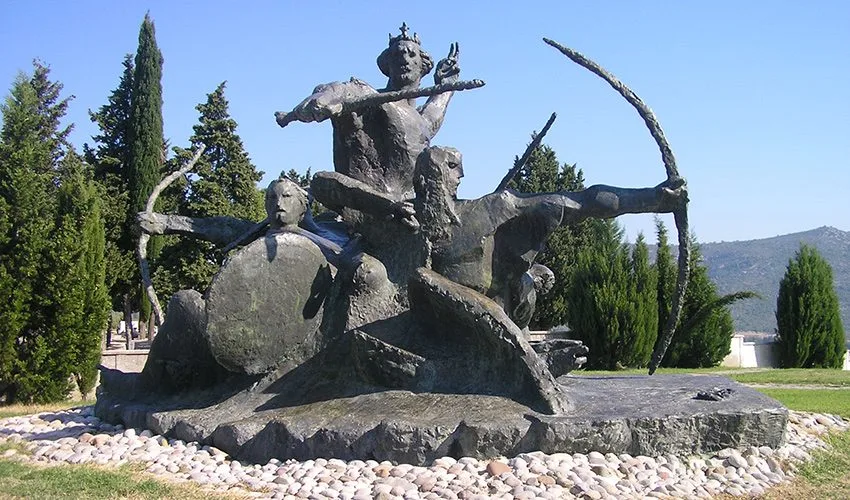
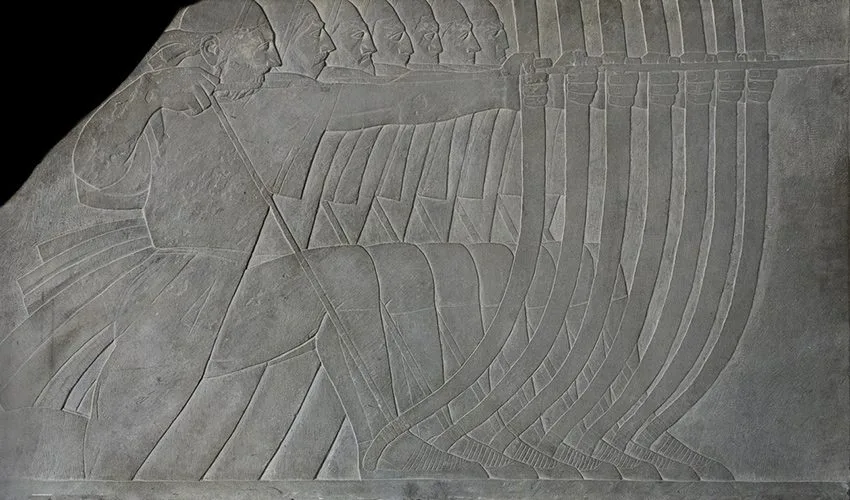
Prince Domagoj (864–876)
Domagoj was the prince of one of the Croatian principalities – Littoral, or Dalmatian, Croatia. He came to power by forcibly removing one of Trpimir's sons from the throne. Between the Neretva and the Cetina lay the Principality of Neretva, which had rulers of its own.
Fighting the Saracens and the Venetians
In the mid-9th century the Saracens (Arabs) began pushing into the Adriatic and plundering Venetian and other ships. They captured several towns on the Adriatic coast, Bari among them, but they did not take the Croatian principalities, which the Croats and the Neretvians defended successfully.
In the mid-860s the Venetians once again tried to break the power of the Croatian prince Domagoj, at the very time when, with the help of the brave Neretva pirates, he was helping the Frankish emperor Louis to free Bari from the Saracens in 871.
While the Neretvians were helping Domagoj to take Bari, the Byzantine fleet briefly plundered and subdued them. However, with the Neretvians' help and a fierce pirate raid, Domagoj managed to free himself from Byzantine rule.
For his important victory in the taking of Bari, Pope John VIII called Domagoj a "glorious prince". Because he dealt the Venetians heavy blows, they called him "the worst of princes" and the Croats "the worst of peoples".
Prince Domagoj also deserves great credit for freeing Croatia from Frankish rule after years of fighting. He was succeeded by Prince Zdeslav (878–879), with whom the Venetians made peace, undertaking to pay an annual tribute for free passage on the Adriatic. The Croatian prince Branimir (879–892) also honoured this peace treaty, but the Neretvians did not, and they kept up their pirate raids on Venetian ships.
The Venetians responded in 887 by attacking the Neretvians twice, led by Doge Pietro Candiano I. In the second attempt, at the Battle of Makarska on 18 September 887, Pietro Candiano I was killed. The death of the Venetian doge in battle with the Neretvians is considered the greatest known success of the Neretva pirates in the early centuries of the Middle Ages. The Croatian Navy marks that day, 18 September, as its own.
This happened at a time when the Venetians and the Neretvians, although under Byzantine rule, were acting as independent powers in the Adriatic, throwing off foreign rule and deciding their own fate. For the Neretvians this was hugely important, because by force of arms they had won supremacy over their part of the Adriatic. After the Battle of Makarska, the Neretvians and the Croats dominated the Adriatic for almost a century.
The Neretva pirates
The Croats and the Neretvians used piracy to defend their principalities from various invaders, especially the Venetians. Soon after settling on the Adriatic coast they developed shipbuilding, drawing on the woodworking skills of their homeland and on Roman and Illyrian seafaring experience.
To survive there and preserve their principalities, military necessity forced them to get used to war at sea. They realised early on how important the sea and seafaring were for economic development. Neretvian piracy in the Adriatic had a military and political significance. It was a form of popular resistance against every enemy of the Croats in the Adriatic. It was often the spark for international conflicts. Through piracy the Croats guarded their coasts and their right to the sea. They made great sacrifices in these struggles. What is often forgotten is that the Neretva pirates were the pirates of the Principality of Neretva, between the Neretva and Omiš.
In the 11th century the Principality of Neretva was joined to Croatia during the reign of Petar Krešimir IV (1058–1074). He was master of our part of the Adriatic. The phrase Mare nostrum – our sea – is well known.
The monument – Domagoj's Ship
In 1997 Domagoj's Ship, a monument by the sculptor Stjepan Skoko, was put up on the hill above Vid; it later came to be known as Domagoj's Archers.
#knez#domagoj#strijelci#gusari#dolina#neretva#metkovic#brewville#bright_arrow#neretva_valley#craft_beer#craft_brewery